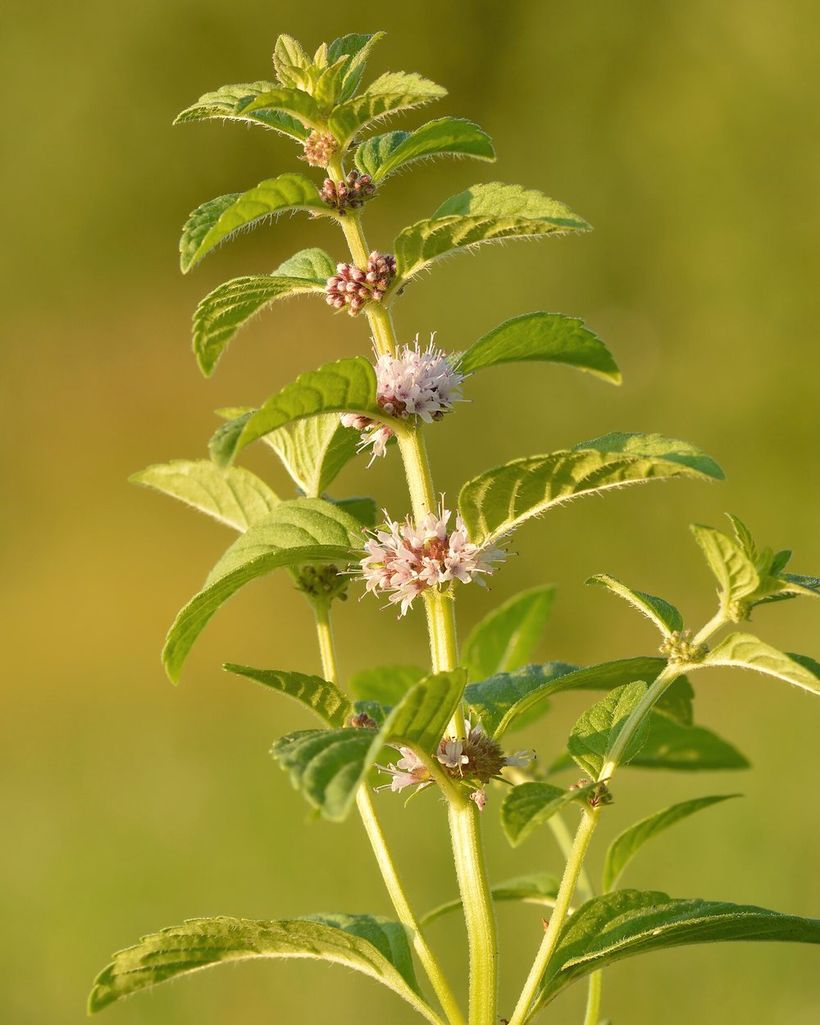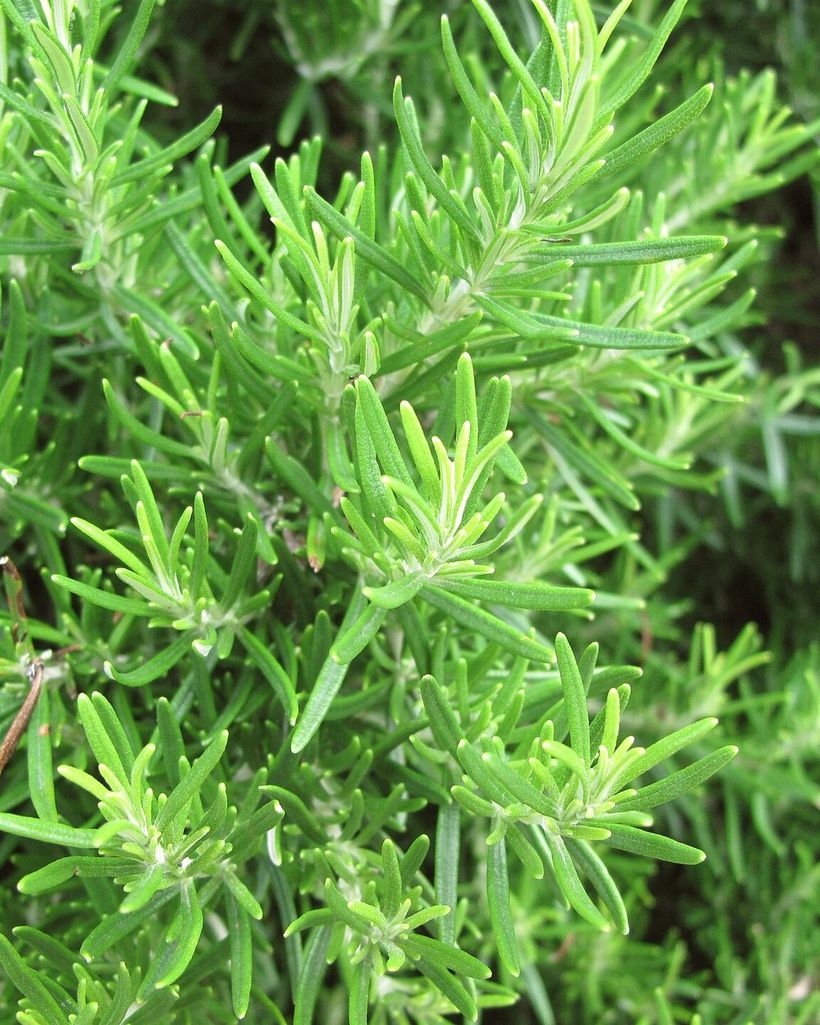
The oil of study and of hair care. A clear, clean aroma that suits work and exam season; it has long been used in scalp massage.
Where it comes from
Plant part used: flowering tops. Extraction method: steam distillation. Typical origin: Spain, Morocco.
Steam distillation means that hot steam passing through the plant carries the volatile compounds with it. The steam is cooled, and the water and the oil separate on their own — the oil floats on top.
What it smells like
Aroma notes: sharp, herbaceous, woody-green.
If you are meeting it for the first time, do not sniff straight into the bottle. Hold it a few centimetres from your nose and waft the aroma towards you — that way the stronger oils will not hit you, and you will pick up the finer notes too.
How people use it
- In the diffuser while studying or working.
- A few drops in a hair mask with coconut oil.
- Diluted on the shoulders after a long day.
- One drop in the palm, then a deep breath mid-morning.
Recipes
The ratios are worked out, and one drop is roughly five hundredths of a millilitre. Where a companion oil is listed, feel free to swap it for whatever you have at home — the drop counts stay the same.
Massage oil after movement
What you get: 30 ml, several sessions.
- Measure sweet almond or grapeseed oil into a 30 ml bottle.
- Add 15 drops of Rosemary and 8 drops of Basil — that is roughly a four per cent blend.
- Close it and turn it over a few times.
- Warm it in your palms and massage into shoulders, back or calves.
Four per cent is for adults and for a specific area. For whole-body use, mix it at half the strength.
Bath salts
What you get: one bath.
- Put a handful of Epsom salt into a small bowl.
- Drop 5 drops of Rosemary onto it and stir it through the salt.
- Scatter the salt into the already-filled bath and stir the water.
- Soak for at least twenty minutes.
Never put essential oil straight into the water: it does not dissolve, and it can reach your skin undiluted. The salt holds it.
Study diffusing
What you get: one study block.
- Fill the diffuser with water up to the line.
- Add 4 drops of Rosemary and 2 drops of Basil.
- Switch it on and study for twenty-five minutes.
- Air the room for five minutes, and only then start the next round.
The break is not an optional extra: after ten to fifteen minutes your nose adjusts to an aroma and you stop registering it.
What to pair it with
These suit the same situations, so they sit well together in a blend:
- Basil — shared topic: Focus and study
- Peppermint — shared topic: Focus and study
- Spanish Sage — shared topic: Focus and study
Safety and storage
Avoid during pregnancy and in people with epilepsy.
In dark glass, somewhere cool, tightly closed. Heat, light and air all age it: citrus oils keep for roughly one to two years, woods and resins for years. It does not need to go in the fridge, but the bathroom windowsill is the worst place for it.
Questions
How much should I use?
For adults, daily whole-body use usually works out at around two per cent: that is roughly twelve drops in thirty millilitres of carrier oil. For sensitive skin and for children, considerably less. The dilution helper on the home page works out the number of drops for your bottle.
What should I dilute it with?
Fractionated coconut oil is the easiest, because it stays liquid, has no scent of its own and does not go rancid. Sweet almond, jojoba and grapeseed oil are good choices too. Essential oil does not mix with water, so for a bath always disperse it in something fatty or in salt first.
What should I watch out for with this oil?
Avoid during pregnancy and in people with epilepsy.
How long does it keep?
In dark glass, somewhere cool, tightly closed. Heat, light and air all age it: citrus oils keep for roughly one to two years, woods and resins for years. It does not need to go in the fridge, but the bathroom windowsill is the worst place for it.