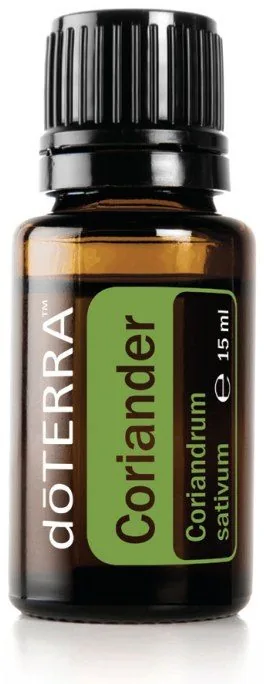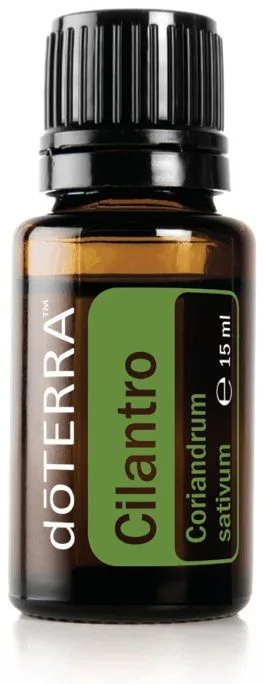
The version made from the leaf — coriander seed oil smells entirely different. This is the greener, sharper one: its place is in the kitchen and in cleaning blends.
Where it comes from
Plant part used: leaf. Extraction method: steam distillation. Typical origin: United States.
Steam distillation means that hot steam passing through the plant carries the volatile compounds with it. The steam is cooled, and the water and the oil separate on their own — the oil floats on top.
What it smells like
Aroma notes: sharp, green, distinctly fresh.
If you are meeting it for the first time, do not sniff straight into the bottle. Hold it a few centimetres from your nose and waft the aroma towards you — that way the stronger oils will not hit you, and you will pick up the finer notes too.
How people use it
- One drop in a salad dressing, where the labelling allows it.
- Diluted with water for kitchen surfaces.
- In the diffuser with lemon.
Recipes
The ratios are worked out, and one drop is roughly five hundredths of a millilitre. Where a companion oil is listed, feel free to swap it for whatever you have at home — the drop counts stay the same.
Abdominal massage oil
What you get: 30 ml, lasts weeks.
- Measure fractionated coconut oil into a 30 ml bottle.
- Add 9 drops of Cilantro — one and a half per cent, deliberately mild.
- After a meal, put some in your palm.
- Massage your abdomen clockwise for five minutes.
The direction is not superstition: it follows the path of the large intestine.
Surface spray
What you get: 300 ml.
- Put 60 ml of vinegar into a 500 ml spray bottle.
- Add 20 drops of Cilantro and swirl to combine.
- Top up with 250 ml of water.
- Shake before use, and wipe down the kitchen counter or the bathroom with it.
Do not use it on natural stone — marble or limestone — as vinegar etches it. There, use water and the oil only.
Door handle and switch wipe
What you get: 250 ml.
- Into a spray bottle, put 15 drops of Cilantro and a teaspoon of alcohol.
- Top up with 250 ml of water and shake.
- Spray onto a cloth — never directly onto the surface — and wipe the handles.
With an electrical switch, always dampen the cloth, never the switch itself.
What to pair it with
These suit the same situations, so they sit well together in a blend:
- Air-X — shared topic: A clean home
- Juniper Berry — shared topic: A clean home
- Lemon — shared topic: A clean home
Safety and storage
Always patch test a new oil on a small area of skin, diluted, and wait a day. Keep it away from eyes and mucous membranes. In pregnancy, while breastfeeding, with a chronic condition or while taking regular medication, seek professional advice first.
In dark glass, somewhere cool, tightly closed. Heat, light and air all age it: citrus oils keep for roughly one to two years, woods and resins for years. It does not need to go in the fridge, but the bathroom windowsill is the worst place for it.
Questions
How much should I use?
For adults, daily whole-body use usually works out at around two per cent: that is roughly twelve drops in thirty millilitres of carrier oil. For sensitive skin and for children, considerably less. The dilution helper on the home page works out the number of drops for your bottle.
What should I dilute it with?
Fractionated coconut oil is the easiest, because it stays liquid, has no scent of its own and does not go rancid. Sweet almond, jojoba and grapeseed oil are good choices too. Essential oil does not mix with water, so for a bath always disperse it in something fatty or in salt first.
What should I watch out for?
Always patch test a new oil on a small area of skin, diluted, and wait a day. Keep it away from eyes and mucous membranes. In pregnancy, while breastfeeding, with a chronic condition or while taking regular medication, seek professional advice first.
How long does it keep?
In dark glass, somewhere cool, tightly closed. Heat, light and air all age it: citrus oils keep for roughly one to two years, woods and resins for years. It does not need to go in the fridge, but the bathroom windowsill is the worst place for it.
Official product information
The section below comes from dōTERRA’s own product information page. It is the manufacturer’s wording — the summary above is ours.
Primary benefits
- Known as a key culinary ingredient, Cilantro oil comes from an herb recognised for its many uses and benefits in the kitchen.
- Formulated from the leaves of the coriander plant, Cilantro has a clearing and clarifying aroma that gives food a fresh and tasty flavour.
- Has light, herbal scent.
The manufacturer’s description
The many uses and benefits of Cilantro have been documented for centuries. Cilantro’s culinary uses are endless! Quickly add a fresh, tasty twist to meats, salads, dips, and stir fries. The distinct, herbal flavour is sure to enliven any dish!
Uses
- Add to stir frys, salads, and dips to experience Cilantro’s distinct flavour.
- Forget about chopping herbed cilantro; make your cooking experience an easy one by using Cilantro essential oil. COOKING WITH CILANTRO Essential oils are very potent compared to dry seasonings, spices, or other flavouring agents, so even the tiniest amount can add a serious blast of flavour to your dish. When using Cilantro in cooking, it is best to use the toothpick method – dip the tip of a clean toothpick into the essential oil bottle and stir the toothpick into your ingredients. After you’ve stirred the toothpick around in the dish, do a taste test to see whether you want to add more of the oil or not.
Directions for use
For food flavouring.