Tea tree is perhaps the only essential oil people ask for by name at a pharmacy. There is good reason: the cosmetics industry has worked with it for a long time, and you will find it in a great many products. It does, however, have one property that gets far less attention — and it ruins most of the bottles sitting in people’s homes.
What it actually is
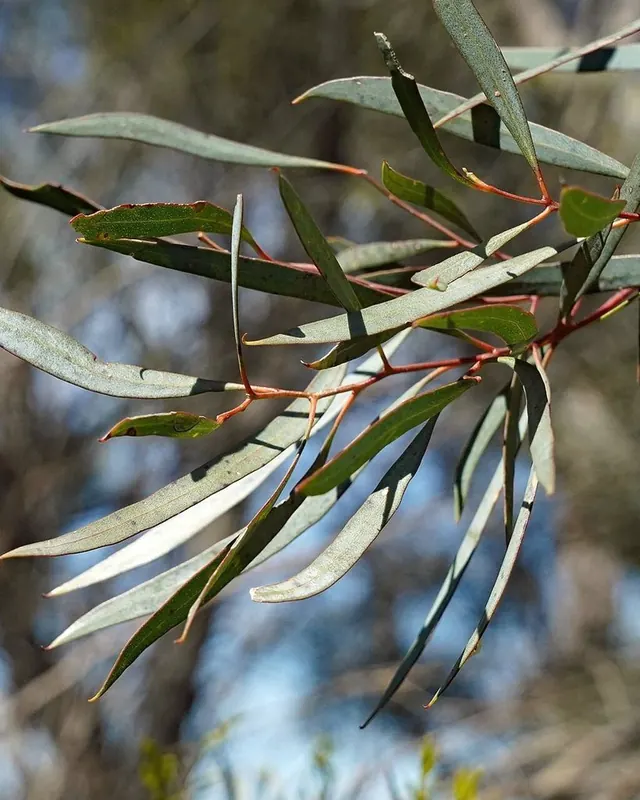
Melaleuca alternifolia is a tree from the east coast of Australia. The main component of the distilled oil is terpinen-4-ol, and quality essentially stands or falls on it. The international standard (ISO 4730) requires at least 30% terpinen-4-ol and at most 15% 1,8-cineole.
- Extraction: steam distillation of the leaves
- Aroma: medicinal, camphorous, faintly woody — many people do not warm to it at first
- Colour: pale yellow to almost colourless
Oxidation — tea tree’s weak point
Tea tree oil oxidises relatively quickly in contact with air, and its oxidation products cause skin reactions considerably more often than fresh oil does. This matters more with tea tree than with most other oils.
What does that mean in practice?
- Buy a small bottle. You will get through 10 ml in eighteen months. You will not get through 50 ml.
- Close it properly. After every use, immediately.
- Keep it cool. The bathroom is the worst place for it: warm and humid.
- Watch the aroma. If it turns turpentine-like and sharp, throw it out. It costs a fraction of what a drawn-out skin reaction costs.
Rule of thumb: eighteen months after opening. Write the opening date on the bottle with a marker.
How I use it
Dabbed on, diluted. At 2% (four drops in 10 ml of carrier oil), with a cotton bud. The common mistake is pressing neat oil onto skin several times a day. That leads to irritation, and the result gets worse, not better.
On nails. Mixed with carrier oil, rubbed in of an evening.
For cleaning. This is where it genuinely earns its place: 500 ml of water, a teaspoon of washing-up liquid and 15–20 drops of tea tree in a spray bottle. For the kitchen counter, the bin, the inside of the fridge.
In hair, for flakes. Add two or three drops to a single portion of your shampoo. Not to the whole bottle — the oil oxidises in there over time.
Safety
| Consideration | Tea tree (M. alternifolia) |
|---|---|
| Dilution on adult skin | 1–3%; dabbed on briefly, up to 5% |
| Phototoxicity | None |
| Children | Over 3 years, 0.5–1% |
| Pets | Distinctly dangerous for dogs and cats — do not use it on them |
| By mouth | Never |
I am singling out the pet point because a lot of “natural flea treatment” recipes with tea tree oil circulate. Tea tree oil can cause poisoning in dogs and cats — this is documented in the veterinary literature. Do not do it.
How to recognise good quality
- ISO 4730 compliance on the label or in the product description
- Terpinen-4-ol content stated (minimum 30%; good oils run 38–42%)
- Dark glass, small bottle
- If it smells sweetish or eucalyptus-like, the 1,8-cineole content may be high — a sign of the cheaper, more irritating versions
Common questions
Why does it sting when I apply it? Either it is too concentrated or the oil has oxidised. Both need fixing.
Is it good for spots? Cosmetic practice has long used it in skin-cleansing preparations. For a specific skin problem, see a dermatologist — essential oil does not replace proper treatment.