When someone asks which oil to start with, I say lavender almost without thinking. Not because it is a miracle cure — it is not — but because it is the most forgiving oil there is. It is hard to go wrong with it, almost everyone finds the smell acceptable, and you can reach for it in so many everyday situations that it will not sit unused on the shelf.
What it actually is
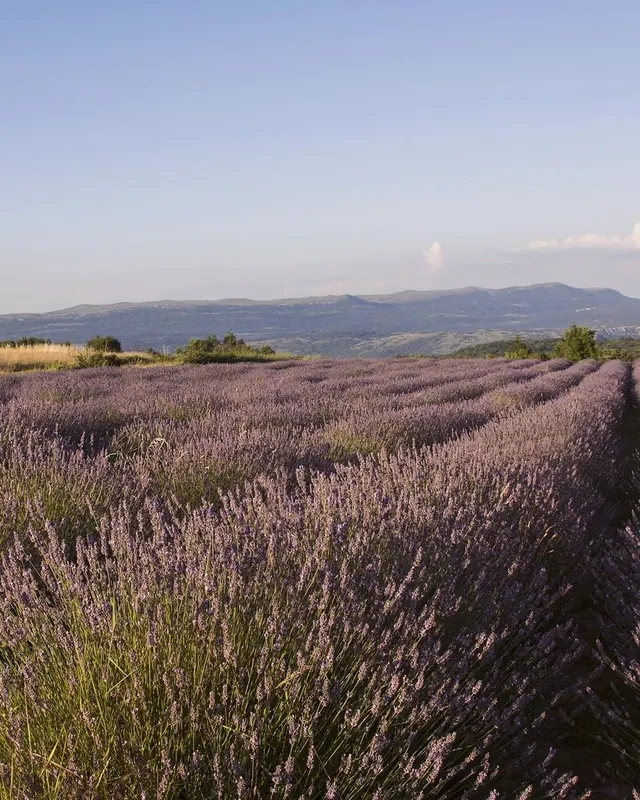
True lavender is Lavandula angustifolia, and that name matters. Shops also sell Lavandula latifolia (spike lavender) and Lavandula x intermedia (lavandin) under a “lavender” label — these are cheaper, stronger and more camphorous, and their composition is different. They are not bad, just different.
- Extraction: steam distillation of the flowering tops
- Origin: France, Bulgaria and Hungary all produce excellent quality
- Key components: linalool and linalyl acetate — these two give it the characteristic soft, faintly sweet aroma
Lavender grown at higher altitude typically contains more linalyl acetate, which makes the aroma softer and less sharp. If a lavender oil smells camphorous, it is either lavandin or it came from a low-lying plantation.
What it smells like
Floral, lightly herbaceous, with a faintly sweet finish. Neither heavy nor insistent — which is why it blends with almost anything. If it strikes you as soapy or synthetic, that is a bad sign: real lavender oil is complex, and it shifts from minute to minute as it evaporates.
How I actually use it
The following are everyday, cosmetic and fragrance uses. Essential oils are not medicines and do not replace medical treatment.
In the diffuser, in the evening. Three or four drops in an ultrasonic diffuser, an hour before bed. In a bedroom this is the simplest way to change how the room feels.
Stirred into body lotion. Six to nine drops into a portion of unscented lotion (about 30 ml). After a shower, onto dry skin.
For the bath. Never drip it straight into the water — oil does not dissolve, and it reaches your skin undiluted. Disperse it first in a tablespoon of carrier oil or a handful of salt.
In ironing water, on bedlinen. One or two drops in 100 ml of water in a spray bottle, shaken well. The scent stays in the fabric for days.
Pillow mist. The same, but add a teaspoon of alcohol to 50 ml of water — it helps the oil disperse and stops it marking the fabric.
Safety
| Consideration | Lavender (L. angustifolia) |
|---|---|
| Dilution on adult skin | 1–3% (9–18 drops in 30 ml of carrier oil) |
| Phototoxicity | None |
| Children | Over 3 years, heavily diluted (0.5–1%) |
| Pregnancy | Ask your doctor |
| Undiluted on skin | Avoid, even though it is often called gentle |
Lavender is frequently described as an oil you can apply neat. I do not recommend it. Sensitisation — when skin starts reacting to something it previously tolerated — develops from exactly this kind of regular, undiluted use, and it is irreversible. No benefit is worth that.
How to recognise good quality
- Botanical name on the label. If it is not there, put it back.
- Country of origin and extraction method. A serious producer prints them.
- Dark glass. Light breaks the oil down. A plastic bottle is a dealbreaker.
- Batch number or best-before date. Essential oil does not spoil like food, but it does oxidise.
- A suspiciously low price. A kilogram of real lavender oil takes more than a hundred kilograms of plant material. That shows in the price.
- GC/MS analysis. Gas chromatography shows the actual composition. The better companies publish it.
Common questions
Can I eat it? Do not consume essential oils unless a qualified professional tells you to, for a specific case and a specific amount. The “one drop in water” advice circulating online has no proper professional basis behind it.
How long does it keep? Stored properly — dark, cool, tightly closed — three to five years. If the aroma turns sour or turpentine-like, it has oxidised.
Dogs, cats? Cats lack a liver enzyme that breaks down certain compounds. Do not diffuse in a room the cat cannot leave, and never put it on their fur.